


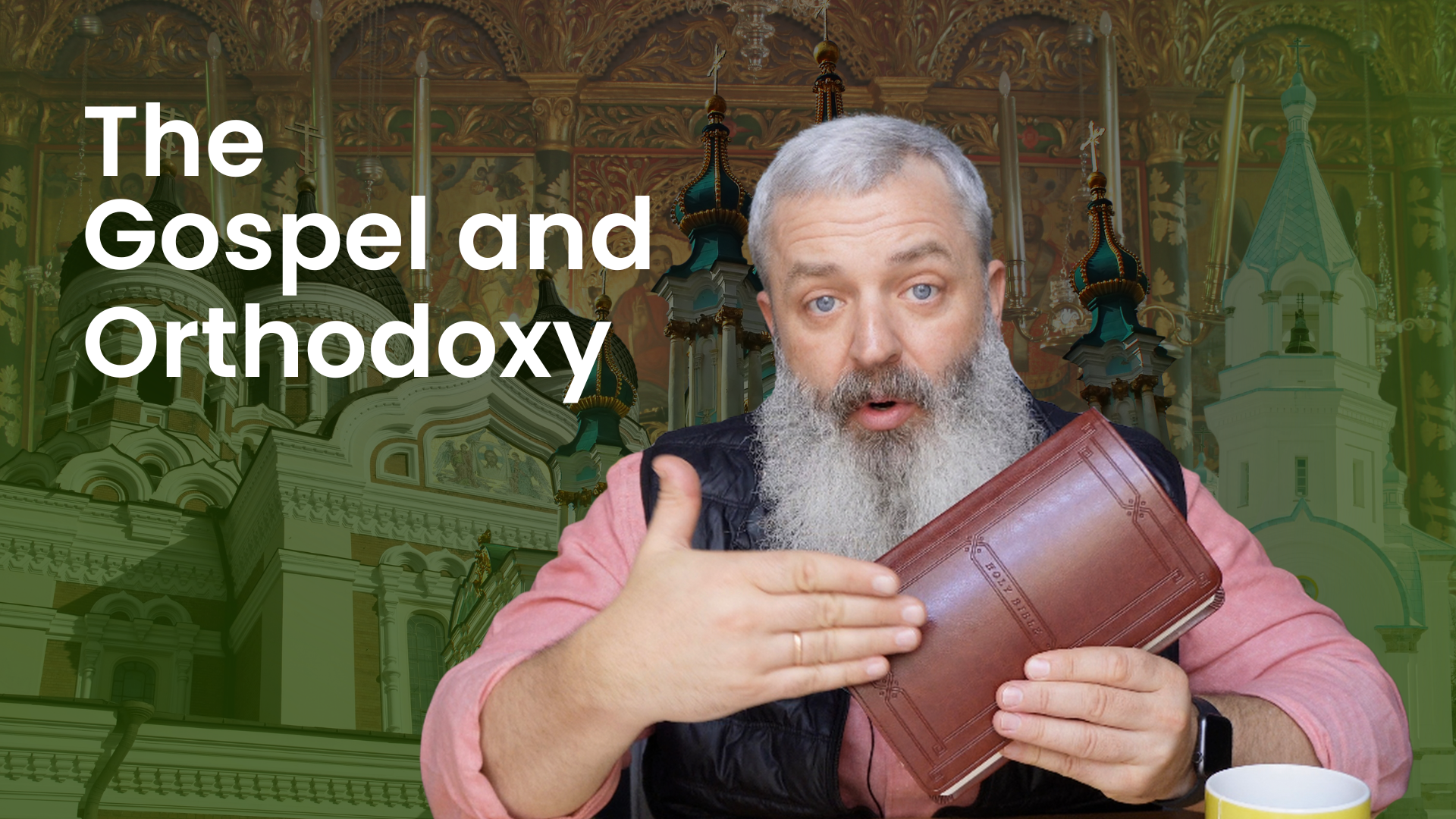
Around 70% of Ukrainians identify as Orthodox, for many means family tradition more than personal conviction. They light candles, attend Easter services, and have a general belief that God exists, yet the clear, personal call of the gospel often remains distant and unclear amid rituals and superstitions. In this episode of the Gospel Today I share with you a few thoughts about how to share the gospel with someone who calls themselves an Orthodox Christian.
The Two Groups of Orthodox
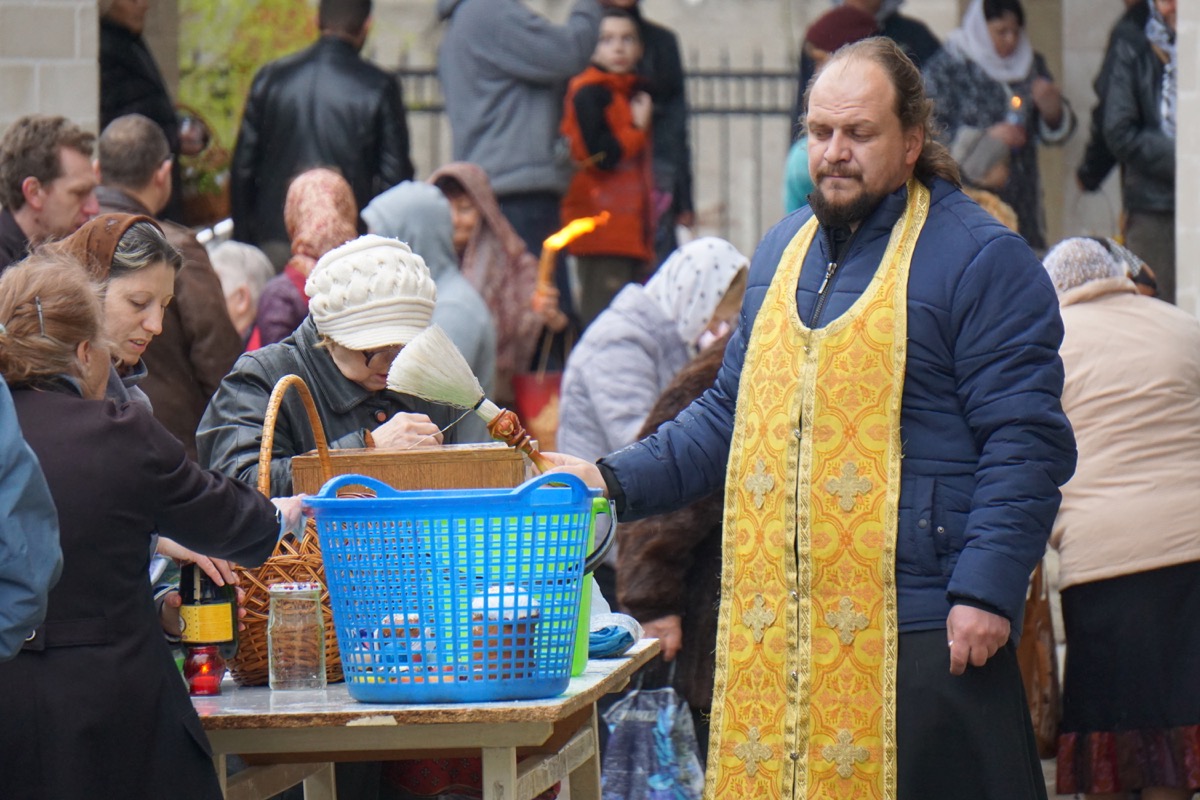
I usually divide Orthodox into two groups; traditional, and conscientious. Traditional Orthodox make up the vast majority. They attend church on major major holidays—Easter, Christmas, perhaps a few others—because that’s what their families have always done. They believe in God and recognize sin’s reality, but they seldom if ever read the Bible and they are not familiar with Orthodox doctrine. The second group I call "conscientious Orthodox." This is a smaller group that consists of those who have deliberately chosen Orthodoxy, studied its teachings, and can articulate them. In Ukraine, I encounter the traditional group far more often, so my points I give below mainly relations to them.

Salvation Remains by Faith Alone
Some have asked me if I think Orthodox people can be saved, and my answer is "yes." Certainly there are people who identify as Orthodox, yet know little to nothing about Orthodox doctrine and instead have nothing more than a simple faith in Jesus Christ. Yet, sadly, the heavy weight of traditions and extra-biblical requirements for salvation found in the Orthodox church create great hinderence to true, simple, and pure faith in Jesus Christ alone for one's salvation. That’s why I believe that even though Orthodox claim to be Christians, a clear, personal proclamation of the gospel remains vital. The goal is not to attack their church, but to point every individual to Christ.
Authority: Church Tradition or Scripture?
Orthodox theology typically points to the Church as its highest authority. By "church" they mean, their ordained clergy, sacraments, and even the physical “temple” where grace is believed to be dispensed. Participation in the sacraments are seen as essential for receiving grace, which can lead to a works-oriented understanding of salvation. On the other hand Protestants hold that Scripture alone is the final authority—God’s voice speaking directly to His people through the Bible.
Practical Ways to Share the Gospel
Over time I’ve found a handful of principles from my personal experience that help these conversations move forward fruitfully. Here are six that have become foundational for Gospel directed conversations.
1. Establish Common Ground
We share much in common: Jesus is Lord and Savior, sin is real, hell exists, God saves. I begin by affirming these truths and asking gentle questions to understand their actual beliefs about Christ and forgiveness.
2. Don’t Ask Them to Leave Their Church
I never start by criticizing their priests, icons, or services. Confrontation on these issues will simply close doors. In stead I just point them to the simiple truths of Scripture and trust the Holy Spirit to lead them as they encounter truth.
3. Show Respect for Their Traditions
Practices like lighting candles, crossing themselves and others are common in the Orthodox church. As long as these practices don't go against Scriptural commands, we shouldn't make them a matter to argue over.
4. Be an Example of Grace
Grace is often under emphasized and misunderstood in Orthodoxy. When grace feels earned through effort, unearned kindness stands out sharply. Forgiveness, practical help, patient love—these reflect the free gift of the gospel and often prompt questions.
5. Use Scripture
Nothing replaces opening a physical Bible together. I hand them one, guide them to John 3:16, read it aloud, and ask what it says about eternal life. I’ve watched soldiers shift from “go to church” or “pray” to “believe”—simply because the text spoke plainly after repeated reading.
6. Focus on the Core Gospel
I return again and again to Christ’s once-for-all sacrifice (Hebrews 7:27). No repeated offerings or priestly mediation is needed. Salvation rests on faith, not accumulated works. Questions about Mary, saints, or icons come up; I answer graciously but always redirect to these central truths.


